
Unlock Thousands
in Tax Savings
with Bonus Depreciation
See how bonus depreciation can unlock tax savings of 10% of your purchase price
Summary: 100% Bonus depreciation is back. If you purchased or renovated your property after 1/19/2025, you qualify for 100% bonus depreciation and significant year 1 tax savings
Cost Seg Example
Purchase price for a short term rental | $1,000,000 |
% allocated to land (not depreciable) | 20% |
| Depreciable basis | $800,000 |
% reclassified into shorter life categories with a cost seg | ~ 25% |
Assets eligible for 100% bonus depreciation with a cost seg | ~ $200,000 |
| Year 1 tax savings at a 37% federal income tax rate with a cost seg | ~ $74,000 |
Higher depreciation → lower taxable income → improved cash flow
Note: This estimate is provided for informational purposes; actual results will depend on the specific features of your property (e.g., quality of the property, condition, year of purchase, renovation work, location, etc)
What Is Bonus Depreciation?
Bonus depreciation is a tax incentive first enacted by Congress in 2001. It is meant to incentivize investment (through the acquisition, renovation, or construction of real estate) and allows owners to deduct the depreciation of qualifying assets in the first year of ownership instead of spreading those depreciation deductions over time. The One Big Beautiful Bill Act ("OBBB" or "OB3") was signed into law on 7/4/2025 and returns bonus depreciation to 100% for properties acquired or construction work performed after 1/19/2025.
How Does Bonus Depreciation Work?
The IRS allows owners of real estate rental properties to use depreciation to offset income, lowering the taxable income, and the taxes you pay each pay. Typically, assets are depreciated over 27.5 or 39 years.
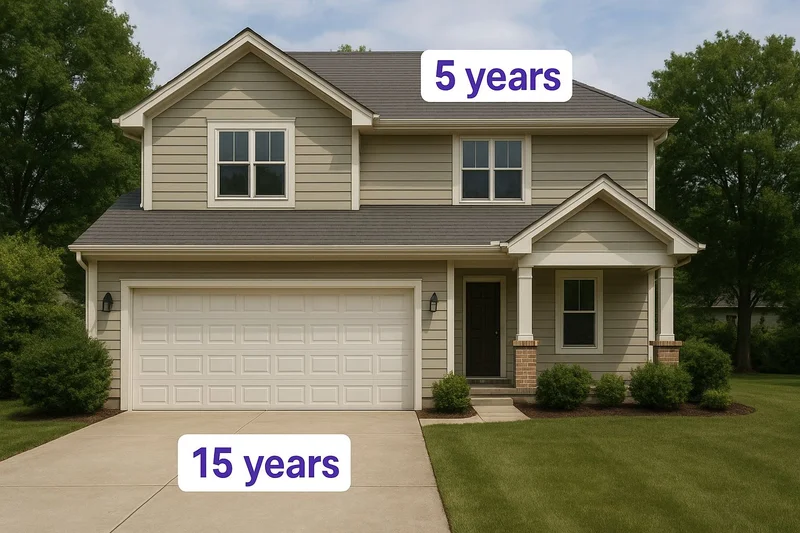
With cost segregation, significant portions of your real estate can be allocated to shorter useful life categories (5, 7, and 15 years) which depreciate more quickly. With bonus depreciation, these tax categories can be fully depreciated in the first year, causing significant increases in first year depreciation and tax savings in the first years of ownership.
Bonus depreciation (technically called the "Special Depreciation Allowance for Qualified Property" by the IRS) is a misleading name and can cause confusion. Bonus depreciation does not create more overall depreciation - instead it further accelerates the depreciation that can be deducted in year 1. "Accelerated depreciation" would probably be a more descriptive name. Bonus depreciation only applies to the components and costs in the shorter life tax categories (i.e., the 5 year, 7 year, and 15 year property).
Depending on when your property was acquired, constructed, and placed into service, you may be eligible to claim up to 100% bonus depreciation. This means you could deduct 100% of the costs of the reclassified components in the shorter life tax categories (i.e., the 5 year, 7 year, and 15 year property) in year 1. So, for example, instead of recognizing those depreciation deductions over 5 years, you will recognize 100% of them in year 1.
Bonus depreciation significantly accelerates your depreciation, increasing the potential tax savings from cost segregation materially.
How do I unlock the savings from bonus depreciation?
Unlocking the savings from bonus depreciation is simple. You need to complete a cost segregation on your property. The purpose of a cost segregation study is to identify and segregate the costs of assets that are eligible for bonus depreciation.
If it is your first year of ownership, you can claim the bonus depreciation on your tax return for that year. If you acquired or constructed the property in a prior year, don't worry, you can always perform a "look back" cost segregation study and and catch up any missed bonus depreciation with your current year tax return.
Our Experience
Nationwide Experience
We have completed cost segs in all 50 states over the last 20 years
Lifetime Audit Protection
We stand behind our work with comprehensive audit protection
No Studies Rejected
The IRS has accepted 100% of our studies because of our engineering-based methodology and high quality reports
What is my bonus depreciation?
Bonus depreciation has been in existence in many forms since 2001, ranging from 0% to 100% at various times. Determining your bonus depreciation percentage is a multi-step process.
When did you acquire your property (typically, this is the date the transaction closed)? This determines which tax law applies to your property.
- If before 9/28/2017: Please reach out to us for more details.
- If between 9/28/2017 and 1/19/2025: Please see the table below.
- If after 1/19/2025: The applicable bonus depreciation percentage is 100%.
If you acquired your property between 9/28/2017 - 1/19/2025, then the applicable bonus depreciation percentage is based on the date Placed in Service as follows:
| Date Placed in Service | Bonus Depreciation % |
|---|---|
| 9/28/2017 thru 12/31/2022 | 100% |
| 2023 | 80% |
| 2024 | 60% |
| 2025 | 40% |
| 2026 | 20% |
| 2027 | 0% |
FAQs
The IRS has an Audit Technique Guide, where it describes the best practices for a cost segregation report that will be accepted by the IRS during an audit. The IRS explicitly states that a cost segregation expert should conduct the study and create the report, and that significant construction and engineering experience is required (See page 35).
Most income-producing properties qualify including: short term rentals, apartments, condos, office buildings, retail centers, warehouses, manufacturing facilities, hotels, and medical facilities. Properties must be used for business or income-producing purposes, not be a personal residence.
Ideally in the same tax year as your acquisition, construction, or renovation — but look-back studies (studies done years later) are very common and can still deliver very attractive tax savings. With a look-back study you do a catch-up without amending prior returns.
Savings vary based on property type, value, and your tax situation. Typically, our clients see first-year tax savings up to 10% of their purchase price. Our clients also typically see first-year tax savings of 5x the cost of their study. Every situation varies, but applied correctly cost seg can be a really lucrative and efficient strategy.
We are happy to provide you a personalized estimate of your benefits and costs and based on your specific situation, or feel free to use our free estimate tool.
Our typical turnaround time is ~3 weeks, depending on the complexity and size of your property. We'll provide a detailed timeline before we get started. For urgent situations, we offer expedited processing for an additional fee.
We also offer Do-It-Yourself (DIY) options, powered by our sister brand Cost Seg EZ, for simpler properties where the study can be completed much faster.
You can learn more about our different offerings here.
It depends on your property and your desired level of service. We are proud to offer a several options so you can choose.
Do-It-Yourself (DIY) studies, powered by our sister brand Cost Seg EZ, can be generated instantly for $595 per property. This option is available for residential properties with a cost basis < $1 million and minimal post-acquisition improvements.
Engineer-Reviewed studies takes DIY and adds a detailed review by our experienced engineering team to ensure maximum benefits and accuracy for $895 per property. This option is available for residential properties with a cost basis < $1 million and post-acquisition improvements up to $100,000.
Fully Engineered studies are our core business. This is for larger residential properties and all commercial properties. The pricing depends on the size and scope of the project and starts at $2,250. Get a personalized proposal here.
You can learn more about our different offerings here.
Cost segregation studies do not increase your audit risk when done properly. Cost segregation is an IRS-approved strategy, and we've never had a study rejected by the IRS. Our studies follow the IRS guidelines and we lead the industry with engineering-based best practices. A poor quality or inaccurate study is what can increase the risk of an audit or cause issues during an audit.
Yes, we provide lifetime audit protection. If the IRS questions any aspect of our cost segregation study, we'll handle the defense at no additional cost to you for Fully Engineered studies. Our studies follow all current guidelines and we've never had a study rejected by the IRS.