
Affordable Cost Segregation Companies for Properties Under $1 Million in 2026
MVO Cost Seg compares 2026 cost segregation options for rentals under $1M, from software-only reports to engineer-reviewed studies built for small investors.
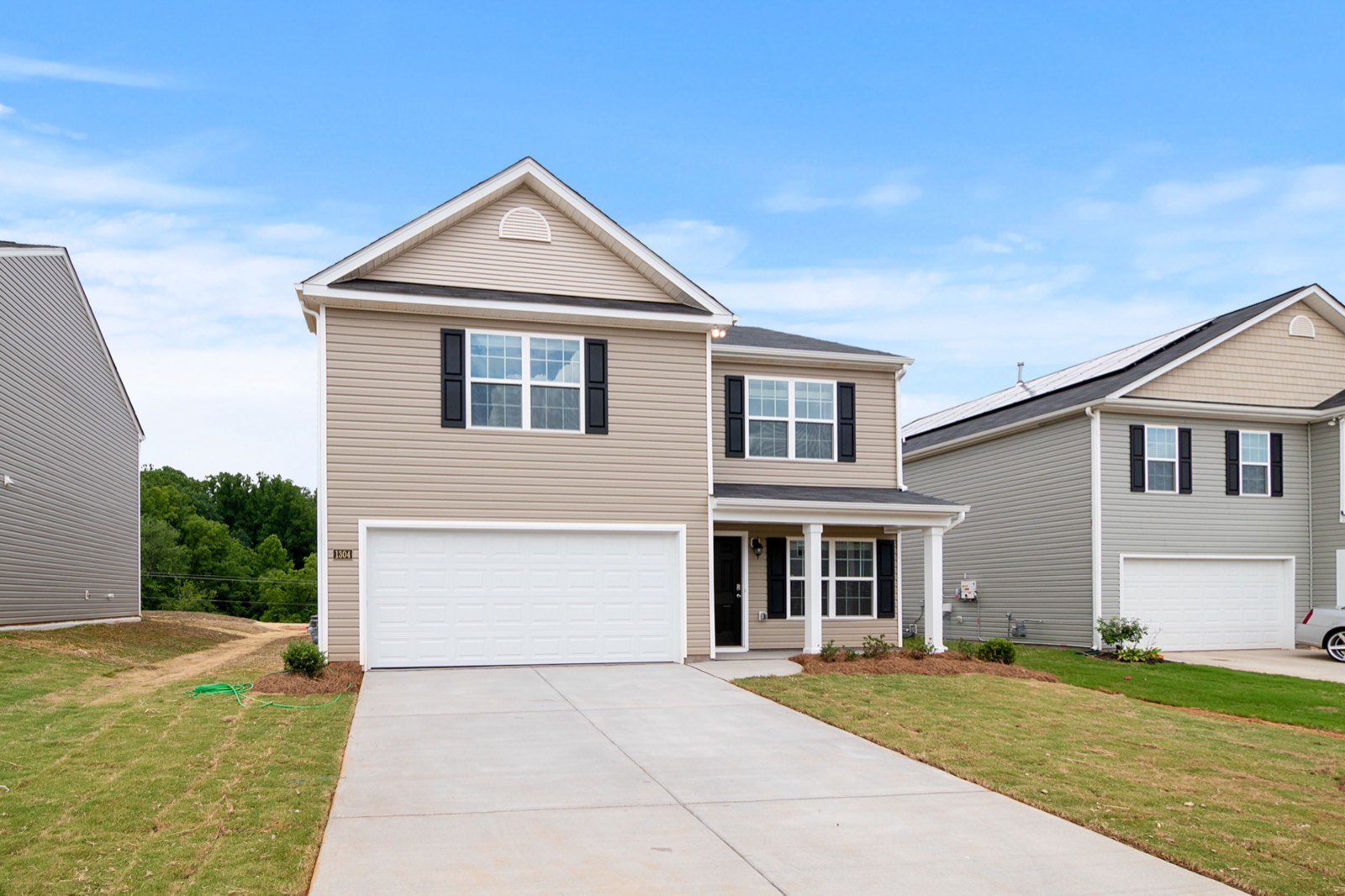
Cheaper options include Cost Seg Smart ($495 for eligible purchases below $300,000), CostSegregation.com ($495 at $500,000 building basis, rising as basis increases), and our eligible DIY Study (from $595), through MVO’s sister brand, Cost Seg EZ. This 2026 comparison covers seven providers serving residential rentals under $1 million; purchase price and depreciable basis differ. MVO Cost Seg is our editorial first choice. Our Engineer Reviewed study, at $895, is the only study under $1,000 in this comparison that names its reviewer. Founder Andrew Kohrs, who spent more than a decade at KPMG and helped run its cost segregation practice, reviews every report. That is our reason for ranking MVO first, not a claim to the lowest fee. We compare eligibility, review depth, and audit support using provider-published claims, not independently verified outcomes. This document is for informational purposes only and does not constitute tax advice. Consult a qualified tax professional.
Compare your property’s fee, not the starting price
A larger eligible rental can make Cost Seg EZ the lower-priced choice. Our eligible DIY Study is $595 and Engineer Reviewed is $895. Cost Seg Smart charges $995 for a single-family rental in its $700,000-$1 million purchase-price band. CostSegregation.com’s residential selector shows $675 at $750,000 building basis and $950 at $990,000 basis. Purchase price and depreciable basis are different measures; establish both before comparing quotes.
Renovation treatment deserves the same scrutiny. Cost Seg Smart now publishes included renovation analysis below $100,000 with a building study and a $595 add-on for $100,000-$1 million; renovation-only work is priced separately. CostSegregation.com describes a modeled same-year basis adjustment and limitations for later improvements. Ask exactly which components and placed-in-service dates the report will cover. Our DIY and Engineer Reviewed renovation limits are below $10,000 and $100,000, respectively; complex projects may need Fully Engineered analysis.
Pricing and scope checked November 6, 2026: Cost Seg Smart pricing, CostSegregation.com pricing, and its renovation FAQ. Confirm current fees and eligibility before purchasing.
Why Consider Affordable Cost Segregation Studies for Properties Under $1 Million?
Cost segregation identifies eligible shorter-life components instead of depreciating everything as a residential building. Residential rental buildings generally use 27.5-year depreciation under the general depreciation system; land is not depreciable. Eligible appliances, carpets, and certain land improvements can have shorter recovery periods. For 2026, 100% bonus depreciation-restored under current legislation-can apply to qualifying components that meet acquisition and placed-in-service rules, not the entire building. Your CPA should confirm eligibility and elections. The opportunity is larger deductions sooner, but an affordable study only makes sense when its timing benefits justify the total cost.
What Problems Make Cost Segregation Selection Difficult for Smaller Rentals?
- Starting prices may not fit your property. Confirm whether the quote applies to your purchase-price band, depreciable basis-the property cost eligible for depreciation-and property type.
- Study scopes differ. A DIY allocation model, remote expert review, and inspection-based engineering are not interchangeable. Ask who checks component classifications and supports the allocations.
- The fee may not cover everything. Confirm what audit assistance includes and ask your CPA about additional tax-preparation costs before comparing totals.
- Deductions may not be usable immediately. Passive-activity and at-risk rules can limit rental losses. Deductions may be suspended for later use rather than reduce current salary income.
Our tiered approach matches scope to budget and complexity. MVO’s sister brand, Cost Seg EZ, powers our DIY Study and Engineer Reviewed study options. Our Fully Engineered study includes an engineer-led virtual or in-person inspection and Lifetime Audit Protection. A lower fee alone does not establish value. For very small rentals, compare usable incremental deductions and their timing against study and tax-preparation costs; there is no universal minimum purchase price that makes a study worthwhile.
This document is for informational purposes only and does not constitute tax advice. Consult a qualified tax professional.
What Should You Look for in an Affordable Cost Segregation Company?
The cheapest quote is useful only if the study fits your property and gives your CPA what they need. Compare eligibility, reviewer responsibility, supporting evidence, audit support, and total engagement cost-not just the advertised fee. Our lineup separates lower-cost options through MVO’s sister brand, Cost Seg EZ, from our Fully Engineered service. That distinction matters: structured allocations, engineer review, and detailed asset-level engineering are different scopes. The IRS recognizes multiple study methods; an “engineering-based” label alone does not establish report quality or guarantee acceptance.
Which Five Features Matter When Comparing Lower-Cost Studies?
- Property-Specific Eligibility and Fee. Ask whether the eligibility limit means purchase price or depreciable basis, how land is excluded, and which property types and renovations qualify. Our DIY Study starts at $595 for residential properties excluding condos, with basis below $1 million and renovations below $10,000. Engineer Reviewed starts at $895, with residential basis below $1 million and renovations below $100,000. Check eligibility before comparing fees.
- Identifiable Reviewer Responsibility. Distinguish self-guided software, technical quality control, expert review, and individual engineer review or sign-off. Ask who checks your inputs and classifications and who answers your CPA’s questions. Our Engineer Reviewed study is reviewed by founder Andrew Kohrs, who spent more than a decade at KPMG and helped run its cost segregation practice; DIY uses structured allocation models. R.E. Cost Seg’s Rapid Report also includes engineer review without a site visit, but R.E. does not name who reviews those reports or list its engineers’ credentials. None of the other options under $1,000 in this guide names the person who checks your study. Ask for that name and that person’s experience before you buy.
- Component-Level Evidence and Appropriate Inspection. Ask what records, photographs, and cost estimates support the allocations. Our Fully Engineered studies start at $2,250 and use actual-documentation, asset-level analysis with a virtual or in-person inspection. The IRS guide emphasizes field inspection, particularly when acquired-property drawings are unavailable. Incomplete records, substantial renovations, or unusual assets strengthen the case for detailed engineering rather than model-only allocations.
- Written Audit-Support Scope. Ask whether support covers technical responses, auditor calls, or representation, and request exclusions in writing. Our DIY and Engineer Reviewed tiers offer audit protection separately for $195; Fully Engineered includes Lifetime Audit Protection. Lower-cost reports do not universally lack support: CostSegregation.com describes included written responses and auditor calls. Support is a defined service-not a guaranteed audit outcome.
- CPA Usability and Total Engagement Cost. Request sample deliverables, supporting schedules, delivery conditions, and optional-service fees. Confirm whether Form 3115 preparation is included or whether you receive only supporting material; request our written engagement details rather than assuming inclusion. R.E. Cost Seg lists an optional $600-per-property Form 3115 CPA Support Package. Our DIY delivery is instant; Engineer Reviewed lists 3-5 business days. Include CPA work and add-ons when comparing quotes.
These five checks are the comparison criteria we use throughout this guide. Our inexpensive tiers provide a lower-cost entry point, but they should not be presented as identical to Fully Engineered service. Match the review depth, documentation, inspection, and support to your property before deciding whether the lowest fee represents the best value. Confirm the final scope and price in writing with the provider and your CPA before committing. This document is for informational purposes only and does not constitute tax advice. Consult a qualified tax professional.
How Can Rental Investors Match an Affordable Cost Segregation Study to Their Property?
The right study is not necessarily the cheapest report. It is the least expensive option that fits your property's complexity and your need for review and support. At MVO Cost Segregation, we offer a choice of service depth, from standardized analysis through MVO's sister brand, Cost Seg EZ, to our Fully Engineered studies. That gives you an upgrade path when inexpensive standardized analysis is not appropriate. Use these six selection scenarios to narrow your options, then ask your CPA whether the accelerated deductions would be usable in your situation.
- Minimize Upfront Fees for a Straightforward Rental
If your rental meets the eligibility requirements and has minimal renovations, consider the lowest-cost entry point. DIY analysis uses structured allocation models rather than the asset-level documentation of a Fully Engineered study.
- Cost Seg EZ DIY Study: From $595 for residential properties excluding condos, with depreciable basis below $1 million and renovations below $10,000.
- Add Individual Engineer Review Within a Smaller Budget
If you want an engineer to review your property's analysis without moving to a Fully Engineered study, consider the next service level. Keep the study fee and optional protection separate when comparing total costs.
- Cost Seg EZ Engineer Reviewed study: From $895 for residential properties with depreciable basis below $1 million and renovations below $100,000. Includes detailed engineer review, with founder Andrew Kohrs reviewing every report before delivery.
- Optional audit protection: Available separately for $195. Do not assume it includes the Lifetime Audit Protection attached to Fully Engineered studies.
- Address Complex Assets or Substantial Renovations
If substantial renovations or unusual assets make standardized allocation a poor fit, a Fully Engineered study is the safer choice for detailed analysis. A low purchase price alone does not make a property simple.
- MVO Fully Engineered study: From $2,250, depending on complexity, with a virtual or in-person site inspection. Available for any property type or basis, using asset-level analysis and actual documentation.
- Compare Audit-Support Commitments Before Purchasing
Compare what protection is included, what costs extra, and the terms of that support. Our service levels do not carry identical commitments, and audit protection does not promise a particular IRS outcome.
- DIY Study protection: Optional audit protection is available as an add-on.
- Engineer Reviewed protection: Optional audit protection is available separately.
- Fully Engineered protection: Lifetime Audit Protection is included.
- Evaluate a Short-Term Rental With Professional Tax Input
Average customer use of seven days or less is an exception to the IRS rental-activity definition. It does not, by itself, establish nonpassive treatment. Material participation and other taxpayer-specific rules still matter, so involve your CPA before treating accelerated deductions as immediately usable.
- Planning resource: Read our guide to cost segregation for short-term rentals as a starting point for that discussion.
- Check Whether the Fee Fits the Expected Usable Benefit
For a very small rental, there is no universal purchase-price cutoff that makes a study worthwhile. Compare the timing value of usable additional deductions against the study fee and tax-preparation costs, especially if passive-loss limitations could defer the benefit.
- Property-specific starting point: Request a free cost segregation estimate.
- Process resource: Review how cost segregation works with your CPA before selecting a service level.
Your decision should connect three things: property complexity, the depth of analysis you need, and when you can use the deductions. Start with an eligible lower-cost tier when it fits. Move to a Fully Engineered study when your property needs component-level documentation or you want included Lifetime Audit Protection. Our team can help you compare service levels; your CPA should evaluate the tax consequences. This document is for informational purposes only and does not constitute tax advice. Consult a qualified tax professional.
How Do Affordable Cost Segregation Companies Compare for Properties Under $1 Million?
The table compares different service scopes, not interchangeable products. A lower fee may buy a self-guided allocation model; a higher fee may include engineer review, an inspection, or broader audit support. Check whether eligibility uses purchase price or depreciable building basis, and confirm who takes responsibility for the report. Our editorial advantage at MVO Cost Seg is the range: MVO’s sister brand, Cost Seg EZ, provides DIY and Engineer Reviewed studies, while our Fully Engineered study adds component-level analysis and inspection. That does not mean we win every price comparison.
| Company / Tier | Published Price | Eligibility and Pricing Basis | Method and Reviewer | Inspection Scope | Audit Support | Extras / Timing |
|---|---|---|---|---|---|---|
| MVO Cost Seg, DIY Study through Cost Seg EZ | $595 | Residential excluding condos; depreciable basis below $1M; renovations below $10,000 | Self-guided, structured allocation model | No site inspection; owner enters property details | Optional $195 audit-protection add-on; not the Fully Engineered Lifetime Audit Protection | Instant delivery |
| MVO Cost Seg, Engineer Reviewed study through Cost Seg EZ | $895 | Residential; depreciable basis below $1M; renovations below $100,000 | Engineer revision and sign-off; every report reviewed by founder Andrew Kohrs, formerly of KPMG’s cost segregation practice | No site inspection; an engineer reviews owner-provided property details | Optional $195 audit-protection add-on; not the Fully Engineered Lifetime Audit Protection | 3-5 business days |
| MVO Cost Seg, Fully Engineered study | From $2,250; complexity-based | Any property type or basis | Engineer-led, asset-level analysis using actual documentation | Virtual or in-person site inspection | Included Lifetime Audit Protection | 4-5 weeks |
| CostSegregation.com, Self-Guided | $495 at $500,000 building basis; $675 at $750,000; $950 at $990,000. The fee rises with basis; it is not a universal flat fee | Building basis up to $1.5M, excluding land; verify interactive pricing for your basis | Software-generated component takeoffs and estimates; reviewer not named | Client photos support more precise analysis; site inspection not listed | Included written information-request responses and auditor calls | Self-guided workflow |
| Cost Seg Smart | Single-family / STR / condo: $495, $895, or $995. Duplex-fourplex: $995, $1,295, or $1,495 | Corresponding purchase-price bands: below $300,000; $300,000-$700,000; $700,000-$1M | Automated remote analysis with technical QC and review of flagged reports; reviewer not named | Mostly remote; optional $595 independent field-data collection in the contiguous 48 states and DC-not necessarily an engineer inspection | Included lifetime written audit support and CPA coordination | Form 3115 preparation separate |
| RentalWriteOff | $899 flat fee per property | Listed residential types include single-family, condos, townhouses, two-to-four-unit properties, STRs, and mobile homes | Remote, expert-reviewed analysis of appraisals or photos and property data; reviewer not named | Remote document/photo analysis; site inspection not listed | Included under provider terms | Two business days after complete intake; Form 3115 included for eligible look-back studies |
| R.E. Cost Seg, Rapid Report | From $950 | Residential below 3,500 sq. ft.; basis up to $1.2M; renovations up to $80,000; straightforward layouts; multi-unit layouts must be identical or substantially similar | Software-enhanced analysis with expert engineer review; reviewer not named | No site visit | Included written responses on methodology, classifications, and conclusions | As little as five business days; optional $600 Form 3115 CPA Support Package |
| Overline | Published benchmarks: $1,440 for condos; $1,800 for specified other residential types; current proposal required | $1,800 benchmark covers standalone single-family homes, townhouses, ADUs, cabins, and two-to-four-unit properties | Engineer review using satellite imagery and construction data; named sign-off by Matthew Gigantelli; Overline advertises 5+ years of specialized cost-segregation experience | On-site inspection not listed as standard | Lifetime documentation and technical audit support | CPA coordination; standard 2-4-week process |
| Virtual Cost Segregation | $2,200 residential; $1,980 each for three or more studies | Residential; published volume discount applies at three studies | Remote study by a US-based engineering team | Completely remote | Included audit support | 3-5 business days; component cost sources, renovation documents, and Form 3115 catch-up service included |
For a $400,000 single-family rental, compare our cost segregation services at $595 DIY or $895 Engineer Reviewed with Cost Seg Smart at $895, RentalWriteOff at $899, and R.E. Cost Seg from $950. Each has different eligibility and scope. Compare reviewer responsibility, documentation, and audit-support terms-not price alone. Confirm current quotes before choosing; a software report with audit support is still different from an inspected, Fully Engineered study.
Who Reviews a Study Under $1,000?
At these prices, the person who checks your study matters as much as the fee. Most low-cost providers describe expert or engineer review without saying who does it, which leaves you unable to check that person’s experience or audit history. The table shows what each sub-$1,000 option publishes on its own website.
| Option | Price | Who Reviews Your Study | Published Experience |
|---|---|---|---|
| MVO Cost Seg, Engineer Reviewed study | $895 | Founder Andrew Kohrs reviews every report | More than a decade at KPMG, where he helped run its cost segregation practice; MVO reports 25+ years of cost segregation engineering, 3,000+ studies, and a 100% IRS acceptance rate to date |
| CostSegregation.com | $495 at $500,000 basis; rises to $675 at $750,000 and $950 at $990,000 | Not named for self-guided reports | KBKG publishes credentialed specialists, but not who reviews an individual report |
| Cost Seg Smart | $495-$995 by purchase price | Not named; its site states that not every report is reviewed by a CPA or licensed engineer | No founders or engineers published; founded in 2026 |
| RentalWriteOff | $899 | Described as expert-reviewed; reviewer not named | No founders or engineers published |
| R.E. Cost Seg, Rapid Report | From $950 | Engineer review; reviewer not named | Director of Engineering named without listed credentials; founded in 2022 |
This document is for informational purposes only and does not constitute tax advice. Consult a qualified tax professional.
Which Are the Best Affordable Cost Segregation Companies for Properties Under $1 Million in 2026?
Our ranking is an editorial assessment of study depth, eligibility, pricing transparency, and support-not an ascending price list. Compare the service you receive, not just the advertised starting fee. Also check whether a provider’s threshold refers to purchase price or depreciable building basis excluding land.
1. MVO Cost Seg
At MVO Cost Segregation, we offer a choice of study depth rather than one product for every rental. Our sister brand, Cost Seg EZ, powers our DIY Study and Engineer Reviewed study for eligible residential properties below $1 million in depreciable basis. Our Fully Engineered study provides an inspection-based alternative when your property needs detailed asset-level analysis. These are different services: an instant DIY report uses structured allocation modeling, while detailed engineer review is a specific feature of the Engineer Reviewed tier. Choose the scope that fits your property and your CPA’s requirements.
- Key Features
- Tiered study depth: Cost Seg EZ provides DIY Study and Engineer Reviewed options within our broader service lineup.
- Named, credentialed review: Founder Andrew Kohrs, our Head of Engineering, personally reviews every report, including every Engineer Reviewed study. He spent more than a decade at KPMG, where he helped run its cost segregation practice. No other study under $1,000 in this comparison names who reviews it.
- Inspection-based upgrade: Fully Engineered studies include an engineer-led virtual or in-person inspection.
- Under-$1-Million Rental Offerings
- DIY Study: Straightforward residential rentals excluding condos, with basis below $1 million and renovations below $10,000.
- Engineer Reviewed: Residential properties with basis below $1 million and renovations below $100,000; includes detailed engineer review, founder review before delivery, and delivery in 3-5 business days.
- Fully Engineered: Complex properties or cases requiring detailed asset-level analysis, with no property-type or basis restriction.
- Pricing: DIY Study: $595. Engineer Reviewed: $895. Fully Engineered: from $2,250, depending on complexity. Optional audit protection costs $195 on each lower-cost tier; Fully Engineered includes Lifetime Audit Protection.
- Pros: Entry price below $600; an $895 Engineer Reviewed study with a named, credentialed reviewer; and an inspection-based upgrade path.
- Cons: Lower-tier eligibility is strict; DIY excludes condos. Audit protection costs extra on the lower-cost tiers. DIY allocation modeling is not equivalent to a Fully Engineered asset-level study.
We place MVO first because our lineup lets a small landlord choose an eligible lower-cost option without treating every property as a DIY candidate. For a straightforward rental, Cost Seg EZ offers an accessible starting point. For a property that needs closer review, our Engineer Reviewed study adds review by Andrew Kohrs for $895, and our Fully Engineered study adds an inspection. That range-not a claim that we always have the lowest fee-is our editorial rationale. Review our cost segregation services or request a free cost segregation estimate to discuss the appropriate scope before committing.
2. CostSegregation.com
CostSegregation.com offers self-guided software for properties with building basis up to $1.5 million, excluding land. Its method uses component-level quantity takeoffs and standardized construction estimates adjusted to user inputs. The FAQ also acknowledges that some quantities rely on ratios and estimates. A useful distinction is its included audit defense: a low-cost software report does not necessarily mean no support. However, it does not name who reviews an individual self-guided report. Confirm both the selected-basis fee and the review scope before comparing it with an engineer-reviewed service.
- Key Features
- Self-guided component-level software with construction estimates adjusted to property inputs.
- Included audit defense covering written Information Document Request responses and calls with auditors to explain the report.
- Under-$1-Million Rental Offerings
- Its supported building-basis ceiling includes rentals below $1 million, subject to the software’s property requirements.
- The FAQ distinguishes estimated quantities from more precise engineering analysis using client photographs.
- Pricing: $495 at $500,000 building basis, $675 at $750,000, and $950 at $990,000 in its current residential selector. At $750,000, its self-guided report costs more than our eligible $595 DIY Study; at $990,000, it also exceeds our $895 Engineer Reviewed fee. Compare the actual basis and engagement scope, not the $495 starting offer.
- Pros: Low observed fee and meaningful included audit-defense assistance.
- Cons: The fee increases with building basis. Its FAQ describes combining purchase basis and same-year renovation costs into a modeled estimate, and says the software is not built to handle properties already in service with later improvements on different dates. Confirm how your actual renovation components, dates, and records will be analyzed. A self-guided report does not name its reviewer.
3. Cost Seg Smart
Cost Seg Smart combines automated component-level estimates with quality-control checks and technical-team review of flagged reports. Most residential work is remote. Its pricing matrix separates single-family homes, short-term rentals, and condos from duplexes through fourplexes, making property type important to the quote. The published package includes CPA coordination and lifetime written audit support. It does not publish its founders or engineers, and its site states that not every report is reviewed by a CPA or licensed engineer.
- Key Features
- Automated component estimates, technical QC, and review of flagged reports.
- CPA coordination and lifetime written audit support.
- Under-$1-Million Rental Offerings
- Published categories cover single-family homes, short-term rentals, condos, duplexes, triplexes, and fourplexes.
- Pricing bands use purchase price, not depreciable basis.
- Pricing: Single-family/STR/condo: $495 below $300,000; $895 in the $300,000-$700,000 band; $995 in the $700,000-$1 million band. Duplex/triplex/fourplex: $995 below $300,000; $1,295 for $300,000-$700,000; $1,495 for $700,000-$1 million.
- Pros: Transparent property-specific bands, CPA coordination, and lifetime written audit support.
- Cons: The $495 starting fee does not apply to every small rental: a $400,000 single-family house falls in the published $895 band. In the $700,000-$1 million band, the $995 fee is $400 above our eligible DIY fee and $100 above Engineer Reviewed. Renovations under $100,000 are advertised as included with a building study; $100,000-$1 million of renovations adds $595. Work on a property already owned has separate renovation-study pricing. Confirm the written scope and total fee; Form 3115 preparation is separate, and no reviewer is named.
4. RentalWriteOff
RentalWriteOff advertises a flat-price, engineering-based remote study with expert review across several residential property types. Its listed coverage includes condos and small multifamily properties, alongside single-family homes and short-term rentals. The process analyzes appraisals or photographs and property data rather than relying on a stated universal site inspection. Standard delivery is two business days after complete intake. For landlords considering a look-back study, included Form 3115 preparation for eligible cases is worth comparing. It describes reports as expert-reviewed but does not name its reviewers, so confirm who signs your study and the audit-support terms.
- Key Features
- Remote, engineering-based analysis with expert review.
- Standard two-business-day delivery after complete intake; Form 3115 included for eligible look-back studies.
- Under-$1-Million Rental Offerings
- Listed types include single-family homes, condos, townhouses, duplexes, triplexes, fourplexes, short-term rentals, and mobile homes.
- Confirm property-specific acceptance and required intake documents before ordering.
- Pricing: $899 per property, advertised as a flat fee.
- Pros: Straightforward published pricing, quick standard delivery after complete intake, and Form 3115 inclusion for eligible look-back work.
- Cons: Reviewers and founders are not named; confirm who signs your study and the audit-support scope in the engagement terms.
5. R.E. Cost Seg
R.E. Cost Seg’s Rapid Report is a software-enhanced service with expert engineer review and no site visit. Its eligibility requirements make it a defined option for straightforward residential properties rather than a universal solution for everything below $1 million. Limits cover square footage, depreciable basis, renovation spending, and layout; multi-unit properties also need identical or substantially similar units. The package includes written audit responses about methodology, classifications, and conclusions. Published delivery can be as little as five business days, but that wording is not an unconditional turnaround guarantee.
- Key Features
- Software-enhanced analysis with expert engineer review, performed without a site visit.
- Written audit responses addressing the report’s methodology, classifications, and conclusions.
- Under-$1-Million Rental Offerings
- Residential properties must be below 3,500 square feet, with depreciable basis $1.2 million or less and renovations $80,000 or less.
- Layouts must be straightforward; multi-unit properties require identical or substantially similar units.
- Pricing: Rapid Report starts at $950. The optional Form 3115 CPA Support Package costs $600 per property.
- Pros: Explicit expert engineer review and defined written audit assistance.
- Cons: Size, renovation, layout, and unit-similarity restrictions can exclude otherwise small rentals. There is no site visit, the fastest advertised delivery is not guaranteed, and R.E. does not name who reviews Rapid Reports or list its engineers’ credentials.
6. Overline
Overline describes an engineer-reviewed process that uses satellite imagery and construction data, with personal sign-off by Matthew Gigantelli of its engineering and CPA partner, Modern CFO. Its residential pricing article provides separate benchmarks for condos and several other residential types. The service also includes CPA coordination and lifetime documentation and technical audit support. Its published standard process takes two to four weeks. Overline advertises 5+ years of specialized cost-segregation experience for Matthew Gigantelli, compared with the 25+ years of cost-segregation engineering experience our MVO team brings. At MVO, founder Andrew Kohrs personally reviews every report. For comparison purposes, the named reviewer is a useful distinction, but the reviewed service description does not establish an on-site inspection as a universal part of every engagement.
- Key Features
- Engineer review using satellite imagery and construction data, with named personal sign-off.
- CPA coordination plus lifetime documentation and technical audit support.
- Under-$1-Million Rental Offerings
- Published residential benchmarks cover condos, standalone single-family homes, townhouses, ADUs, cabins, and two-to-four-unit properties.
- Obtain a proposal confirming your property’s scope rather than treating a benchmark as a binding quote.
- Pricing: Provider-published benchmarks are $1,440 for a residential condo and $1,800 for the specified other residential types. These are not independently verified market averages.
- Pros: Named reviewer, CPA integration, and lifetime technical support.
- Cons: Published benchmarks exceed several entry-level options in this list. Current pricing requires confirmation, and an on-site inspection is not listed as standard.
7. Virtual Cost Segregation
Virtual Cost Segregation offers residential studies performed completely remotely by a US-based engineering team. Its advertised package combines component cost sources, renovation-document review, audit support, and Form 3115 catch-up service. Published delivery is three to five business days. Its fee is higher than the budget tiers covered here, but the bundled scope matters when comparing quotes that charge separately for look-back assistance or other services. Owners ordering several studies also have a published volume option. Confirm that the remote-only process fits the property’s documentation and inspection needs before engaging.
- Key Features
- Completely remote work by a US-based engineering team.
- Published scope includes component cost sources, renovation documents, audit support, and Form 3115 catch-up service.
- Under-$1-Million Rental Offerings
- A published residential study package; confirm acceptance and scope for your specific rental.
- A multi-study discount for owners ordering three or more studies.
- Pricing: $2,200 per residential study, or $1,980 each for three or more, reflecting the published 10% discount.
- Pros: Bundled scope, published three-to-five-business-day delivery, and a stated volume discount.
- Cons: Higher upfront fee than the entry-level options listed here. A remote-only process may not fit cases requiring an inspection.
This document is for informational purposes only and does not constitute tax advice. Consult a qualified tax professional.
How Were Affordable Cost Segregation Companies Evaluated for This 2026 Guide?
We reviewed public provider materials and IRS guidance for this guide. We did not commission studies, test reports, or independently validate advertised savings or audit histories. Our editorial ranking places MVO Cost Seg first for service-depth choice: DIY Study and Engineer Reviewed options through our sister brand, Cost Seg EZ, plus our Fully Engineered study. That is not a claim that we offer the lowest price for every rental. The lowest qualifying total fee depends on your property, eligibility, required support, and written engagement terms-not simply the advertised starting price.
- Criterion: Total Fee
What Was Compared: Base study prices plus disclosed support add-ons, inspection charges, and Form 3115 costs. For example, R.E. Cost Seg lists a separate Form 3115 CPA Support Package. Undisclosed costs were not assumed to be included. - Criterion: Property Eligibility
What Was Compared: Purchase-price versus depreciable-basis thresholds, property type, square footage, renovations, and unit layout where disclosed. A low advertised fee matters only if your property qualifies for that engagement. - Criterion: Reviewer Responsibility
What Was Compared: Software-generated analysis, technical quality control, expert review, individual engineer review, and whether the provider names the reviewer and publishes that person’s experience. We distinguished review responsibility from inspection: a field data collector is not necessarily an inspecting engineer. - Criterion: Component-Level Evidence
What Was Compared: Actual cost records, photographs, standardized estimates, and allocation-model limitations. The IRS describes detailed engineering using actual costs as generally the most methodical and accurate approach, while recognizing other methods. An “engineering-based” label alone does not guarantee acceptance. - Criterion: Inspection Adequacy
What Was Compared: Remote documentation, virtual inspections, and field inspections against property complexity. The IRS recommends field inspection and calls it critical for acquired properties lacking drawings and specifications. Our preference for detailed engineering and inspection on unusual or poorly documented properties is an editorial judgment-not a categorical IRS ban on remote studies. - Criterion: CPA Usability
What Was Compared: CPA coordination, report deliverables, and whether Form 3115 preparation is included, separately available, or limited to supporting information. These are different services and should be confirmed before engagement. - Criterion: Written Audit Support
What Was Compared: Documented technical assistance and contractual scope, not acceptance guarantees. CostSegregation.com, for example, describes included written audit responses and auditor calls. We did not assume lower-cost reports lack support or treat competitor-produced pricing averages as independent industry statistics.
Why Is MVO Cost Seg the Editorial First Choice for Affordable Studies Under $1 Million?
We rank MVO Cost Seg first because our Engineer Reviewed study pairs a sub-$1,000 price with a reviewer you can identify. For $895, every report is reviewed by founder Andrew Kohrs, who spent more than a decade at KPMG and helped run its cost segregation practice. No other study under $1,000 in this comparison names who reviews it. Through MVO’s sister brand, Cost Seg EZ, the DIY Study starts at $595, and our Fully Engineered study adds inspection-based analysis for complex properties. Another provider may quote a lower fee, so compare written scope, reviewer responsibility, and audit support, and ask your CPA about usable deductions. Request a free cost segregation estimate. This document is for informational purposes only and does not constitute tax advice. Consult a qualified tax professional.
FAQs
Smaller rental investors consider cost segregation because eligible components can be depreciated sooner than the residential building, bringing deductions forward. At MVO Cost Seg, we help you evaluate that timing benefit against the study fee-not just the size of a projected deduction. Qualifying shorter-life components may receive 100% bonus depreciation, restored under current legislation, subject to eligibility and elections your CPA should confirm. However, passive-activity and at-risk limitations can restrict current deductions. A larger depreciation deduction therefore does not automatically mean an immediately usable tax benefit or refund.
A cost segregation study identifies and allocates costs to property components with different depreciation periods. Residential rental buildings generally follow 27.5-year straight-line depreciation under GDS, using the mid-month convention; land is not depreciable. Eligible appliances and carpets can have five-year lives, while qualifying fences and shrubbery can have 15-year lives. Ordinary structural HVAC, roofs, plumbing, and kitchen cabinetry do not automatically qualify for shorter lives. At MVO Cost Seg, our Fully Engineered studies use actual-documentation, asset-level analysis, unlike the structured allocation models used in DIY studies.
Lower-priced options include CostSegregation.com, displaying $495 at a selected $500,000 building basis, and Cost Seg Smart, charging $495 for qualifying residential purchases below $300,000. Neither price applies universally. CostSegregation.com’s residential selector rises to $675 at $750,000 building basis and $950 at $990,000; Cost Seg Smart charges $995 in its $700,000-$1 million single-family purchase-price band. MVO Cost Seg offers a DIY Study from $595 and an Engineer Reviewed study from $895 through our sister brand, Cost Seg EZ. RentalWriteOff advertises $899 for an engineering-based, expert-reviewed remote study; R.E. Cost Seg’s Rapid Report starts at $950. Of these, our Engineer Reviewed study is the only one that names who reviews your report: founder Andrew Kohrs. These are not equivalent scopes: compare eligibility, allocation methodology, reviewer involvement, and audit-support terms before choosing the lowest advertised fee.
For a $400,000 rental house, compare MVO Cost Seg’s $595 DIY Study and $895 Engineer Reviewed study with Cost Seg Smart’s $895 purchase-price band-not its $495 starting offer. RentalWriteOff advertises $899; R.E. Cost Seg starts at $950, subject to size, renovation, and layout restrictions. Our DIY option excludes condos and requires renovations below $10,000; Engineer Reviewed permits renovations below $100,000. Both require residential basis below $1 million. Choose the Engineer Reviewed study when you want an identified expert to check the analysis, since Andrew Kohrs reviews every report; a Fully Engineered study is the safer choice for complex or heavily renovated properties needing asset-level documentation.
It depends on the provider. MVO Cost Seg’s lower-cost tiers require depreciable basis strictly below $1 million, not a purchase price at or below that amount. Land is excluded from depreciable basis, so purchase price and building basis are not interchangeable. Cost Seg Smart instead keys its residential pricing bands to purchase price. CostSegregation.com describes eligibility using building basis excluding land, supporting properties up to $1.5 million. Before comparing quotes, ask your CPA to establish the relevant basis and confirm each provider’s property-type and renovation limits.
Some do, but the scope and fee vary. MVO Cost Seg lists audit protection as a $195 add-on for its DIY and Engineer Reviewed tiers; our Fully Engineered studies include Lifetime Audit Protection. Do not assume that lifetime coverage extends to the lower-cost tiers. CostSegregation.com includes defined audit defense covering written Information Document Request responses and participation in auditor calls to explain the report. RentalWriteOff also lists audit support under its terms. Ask what assistance is included, what costs extra, and what exclusions apply. Support never guarantees an audit outcome.
Hypothetically-not an MVO Cost Seg result-assume purchase and service in July 2026, 100% business use, GDS eligibility, no separately scheduled baseline assets, $80,000 land, and $320,000 depreciable basis. Assume 20% ($64,000) qualifies for 100% bonus depreciation, restored under current legislation; neither allocation is typical or promised. Without reclassification, mid-month straight-line depreciation is $320,000 ÷ 27.5 × 5.5/12 = $5,333.33. With reclassification: $64,000 + ($256,000 ÷ 27.5 × 5.5/12) = $68,266.67. The additional $62,933.33 is a deduction, not a refund; limitations can defer use. Your CPA must confirm eligibility and elections.
Cost segregation may not justify its fee when usable incremental deductions and their timing value are too small relative to study and tax-preparation costs. No universal minimum purchase price settles that question. At MVO Cost Seg, we recommend weighing those costs with your CPA, especially if passive-loss limitations would suspend deductions rather than reduce current taxable income. A low advertised fee alone does not establish value for your property. This document is for informational purposes only and does not constitute tax advice. Consult a qualified tax professional.